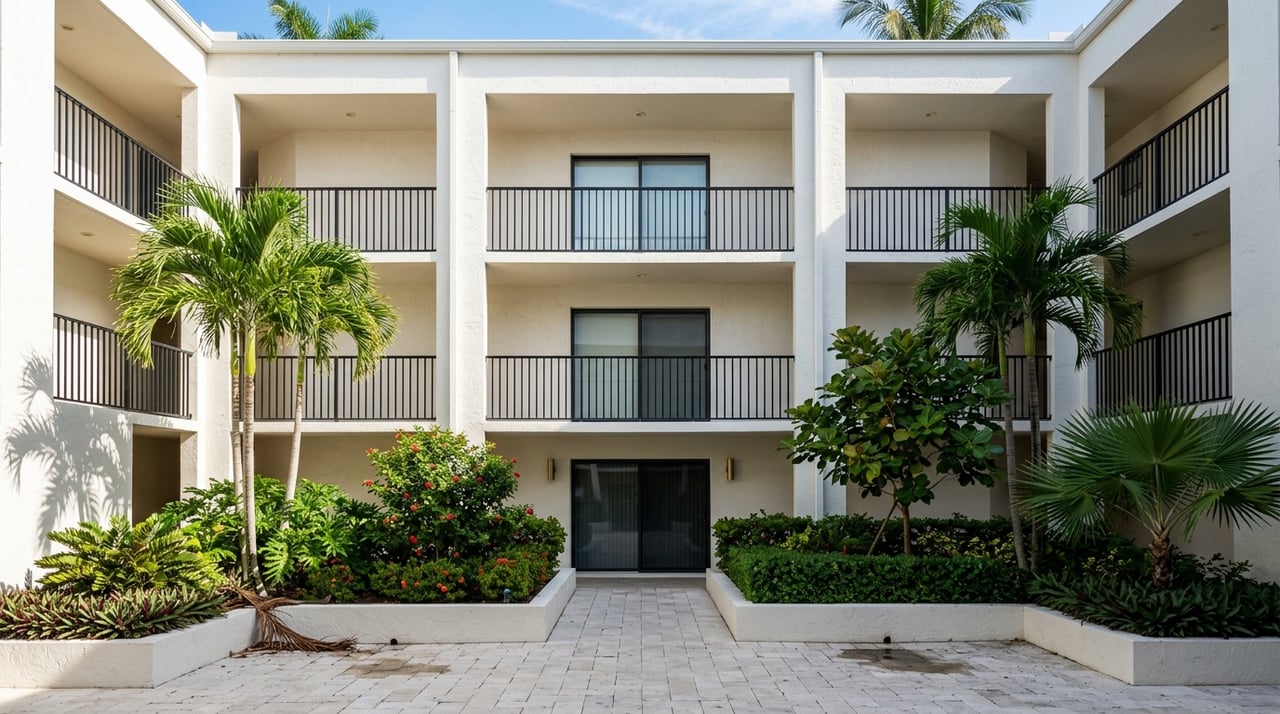
Trying to decide between a condo and a house in Naples? You are not alone. Many buyers love the Naples lifestyle but get stuck on one big question: do you want the ease of a condo or the control of a single-family home? The right choice depends on how you plan to live, what costs you are comfortable with, and how much responsibility you want day to day. Let’s dive in.
Condo vs. house in Naples
In Naples, this decision is about more than size or style. You are choosing between two different ownership models, and Florida law treats them differently.
A condominium usually means you own your unit and share ownership of the common elements with other owners. A single-family house usually gives you control over the dwelling itself, though you may still be part of an HOA with rules, fees, and shared amenities. That difference affects upkeep, privacy, insurance, and monthly costs.
Ownership and daily responsibility
What condo ownership means
With a condo, you typically have exclusive possession of your unit while the association is responsible for common elements. In practical terms, that often means less hands-on responsibility for exterior upkeep and shared spaces.
That convenience can be a real plus if you want a lock-and-leave property or seasonal home in Naples. At the same time, condo living usually comes with more shared governance and less direct control over certain parts of the property.
What house ownership means
A single-family home usually gives you more direct control over repairs, improvements, yard use, and exterior changes. If having your own outdoor space and more privacy matters to you, that can be a major advantage.
The tradeoff is responsibility. In most cases, you will carry more of the direct maintenance burden, along with more decision-making about the home’s exterior, systems, and long-term upkeep.
Why an HOA house is still not rule-free
It is easy to assume a detached home means total freedom, but that is not always true in Naples. A house in an HOA can still include dues, community standards, common-area responsibilities, and shared amenities.
So even if you prefer a house, it is smart to review the governing documents carefully. The ownership experience is usually less communal than a condo, but it may still include rules and ongoing fees.
Naples costs go beyond price
Median prices show a clear gap
Naples-area market data for Collier County excluding Marco Island shows that condos often have a lower entry price than single-family homes. In the 2025 annual report, the median closed price was $729,000 for single-family homes and $448,000 for condos.
In January 2026, that gap remained wide. The median closed price was $812,500 for single-family homes and $450,000 for condos.
Lower price does not always mean lower cost
A condo may look more affordable at first glance, but that does not automatically mean it will cost less overall. Monthly dues, insurance needs, and possible special assessments can significantly affect your carrying costs.
A house may have a higher purchase price, but your monthly expenses will be shaped by insurance, maintenance, taxes, and any HOA fees if the home is in a managed community. The best way to compare options is to look at the full monthly picture, not just the list price.
Resale speed is not one-size-fits-all
Some buyers assume houses always sell faster than condos, but Naples market data does not support a simple rule. In 2025, average days on market were 93 for single-family homes and 97 for condos.
In January 2026, condos actually averaged 93 days on market while single-family homes averaged 102. That tells you resale speed depends more on location, price point, condition, and market segment than property type alone.
Insurance differences matter in Florida
House and condo coverage are not the same
Florida’s homeowners’ insurance guidance draws a clear line between the two property types. A standard HO-3 policy is designed for owner-occupied single-family homes and typically covers the main dwelling structure, unattached structures, personal property, liability, and medical payments.
An HO-6 policy for a condo owner covers personal property and certain building items that are not insured by the association’s policy. That means you need to understand exactly where the association’s coverage stops and where your personal coverage begins.
Flood planning should be part of every Naples purchase
In Naples, flood risk should never be treated as an afterthought. The City of Naples states that normal homeowners insurance does not cover flooding, and flood insurance is provided through the National Flood Insurance Program.
The city also notes that all Naples residents can apply for NFIP flood insurance. Because the city participates in the program with CRS Class 5 status, standard flood insurance policies may qualify for up to a 25% discount.
Check flood risk by address
Flood risk is not something you should guess based on a neighborhood name or how close a property looks to the water. The City of Naples emphasizes that flood risk should be checked by address.
That is true whether you are buying a condo or a house. Before you make an offer, it is wise to confirm flood zone details and understand what your lender and your own risk tolerance may require.
Condo fees and reserve health deserve close attention
Condo disclosures are a major part of due diligence
Florida requires important condo disclosures during the sale process. These may include the declaration, bylaws, budget, recent financial statements, and when applicable, the most recent milestone inspection summary and structural integrity reserve study.
For buyers, that means condos often come with more visible association information than a typical house purchase. That extra transparency can be helpful, but it also means you need to read the documents closely.
Reserve funding can affect your real cost
Florida law requires structural integrity reserve studies for residential condominium buildings three stories or higher at least every 10 years after creation. This matters because reserve funding, deferred maintenance, and future repair needs can directly affect your out-of-pocket costs.
If an association is underfunded, a lower purchase price may not feel like a bargain for long. Asking about reserves, inspections, and planned projects is one of the smartest things you can do before buying a Naples condo.
Rental rules can change your decision
City of Naples short-term rental limits
If you are buying with rental income in mind, local rules need to come first. The City of Naples says a dwelling may generally be rented for less than 30 days only three times per calendar year.
After that, the dwelling may only be rented for a minimum of 30 days, and it cannot be advertised as available for less than 30 days at any time. The city also explains that a property rented more than three times in a calendar year for periods under 30 days can be classified as a transient lodging facility, which is not permitted in most residential zoning districts.
Collier County rules also matter
Outside city limits, unincorporated Collier County has another layer of regulation. Short-term vacation rentals must be registered under the county ordinance that took effect on January 3, 2022.
On top of that, accommodations such as condos, apartments, and houses rented for six months or less may be subject to county transient rental taxes. If you are an investor or part-time owner, it is important to review zoning, registration, and tax obligations before you count on rental income.
Association rules may be stricter
Even when local zoning allows a rental, the association may not. Condo declarations, bylaws, and rules, or HOA governing documents for a house, may limit lease length, guest use, or tenant activity.
That is why the association file matters just as much as the listing details. A property can look perfect on paper but still be the wrong fit if the rental rules do not match your plans.
Tax exemptions for primary residents
Homestead can help both condo and house buyers
If the property will be your permanent Florida residence, you may qualify for homestead exemption in Collier County. According to the Collier County Property Appraiser, this can reduce assessed value by up to $25,000 for all taxing authorities and provide another exemption on value above $50,000 for non-school taxes.
This benefit can apply whether you buy a condo or a house, as long as the property meets the permanent residence requirements. For many primary-residence buyers, that makes ownership more affordable over time.
Senior exemption may offer added savings
Collier County also offers an additional exemption for seniors who meet certain requirements. For 2026, the household adjusted gross income limit is $38,686 or less, and the owner must be age 65 or older and meet homestead rules.
If that may apply to you, it is worth factoring into your budget planning. Small tax differences can have a meaningful impact over the years.
A simple way to choose your best fit
A condo may fit you best if
- You want lower day-to-day exterior upkeep
- You like a lock-and-leave lifestyle
- You value shared amenities
- You are comfortable with association rules, dues, and reserve-related risk
A house may fit you best if
- You want more privacy
- You want more direct control over the property
- You want more flexibility with outdoor space
- You are prepared to manage maintenance, insurance, and flood planning more directly
If you are an investor or seasonal owner
Start with the rules before the price. In Naples, zoning, association restrictions, registration requirements, and rental tax obligations can change whether a condo or house actually works for your goals.
Questions to ask before you buy
Before you choose a condo or a house in Naples, ask these questions:
- What exactly does the association maintain, and what remains your responsibility?
- Are reserves adequately funded?
- Is a milestone inspection or structural integrity reserve study required or complete?
- What is the real monthly carrying cost once dues, insurance, taxes, and possible assessments are included?
- What do city, county, and association rules say about rentals?
- Is the property in a flood zone, and what insurance may be required?
The answers will usually tell you more than the listing photos ever could. A great fit is not just about what looks best today. It is about what feels manageable, affordable, and aligned with how you want to live in Naples.
If you want help sorting through condos, houses, fees, flood factors, or rental rules in Naples, Top Selling Realty is here to guide you with clear communication, local insight, and personalized support.
FAQs
Should you buy a condo or house in Naples if you want less maintenance?
- A condo is often the better fit if your priority is lower day-to-day responsibility for exterior upkeep and shared spaces.
Are condos cheaper than houses in Naples?
- Condos often have a lower purchase price in Naples, but your total cost may still be shaped by dues, insurance, and possible assessments.
Do Naples houses always offer more freedom than condos?
- Usually yes, but a house in an HOA may still come with rules, fees, and shared community obligations.
What rental rules apply to Naples condos and houses?
- In the City of Naples, a dwelling may generally be rented for less than 30 days only three times per calendar year, and association rules may be even stricter.
Why does flood risk matter when buying in Naples?
- Standard homeowners insurance does not cover flooding, so you should check flood risk by address and understand any flood insurance needs before you buy.
Can homestead exemption apply to a Naples condo or house?
- Yes, a condo or house may qualify if it is your permanent Florida residence and meets Collier County homestead requirements.