Trying to choose between Cape Coral and Fort Myers? It is a common Southwest Florida question, and the answer usually comes down to how you want to live day to day. If you are weighing waterfront access, commute patterns, home styles, and overall feel, a side-by-side look can make your decision much clearer. Let’s dive in.
Cape Coral vs Fort Myers at a Glance
Cape Coral and Fort Myers sit close to each other, but they offer different living experiences. Cape Coral is the larger city by land area, with 106.02 square miles and an estimated 233,025 residents in 2024. Fort Myers is smaller at 39.84 square miles with 99,918 residents, and it has a denser layout overall.
That difference shows up quickly in how each place feels. Cape Coral tends to feel more spread out and residential, while Fort Myers feels more compact and urban in many parts of the city. If your lifestyle depends on space, water access, or being near a more centralized activity hub, this comparison matters.
City Feel and Neighborhood Pattern
Cape Coral feels more residential
Cape Coral has a higher owner-occupied housing rate at 77.2%, compared with 49.1% in Fort Myers. That points to a city with a stronger owner-occupied residential profile overall. For many buyers, that translates into a lifestyle centered on homes, canals, and neighborhood living.
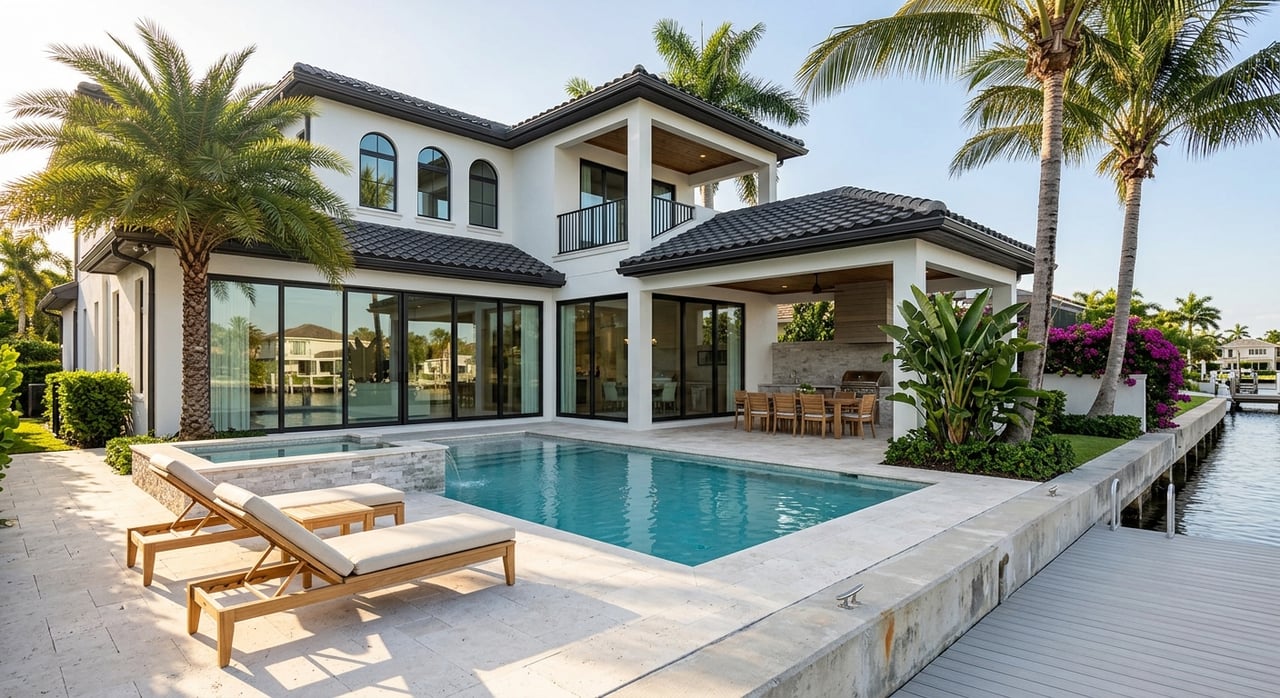
Cape Coral is also built around a master-planned waterfront concept. Official city materials describe it as a waterfront community shaped by canals and residential growth. If you picture wider residential areas and a water-first identity, Cape Coral aligns well with that vision.
Fort Myers feels more central and compact
Fort Myers has a higher population density at 2,168.8 people per square mile, compared with 1,829.9 in Cape Coral. Even without being a large city, that denser pattern can create a more urban feel. You may notice it in the mix of housing, activity centers, and access to public facilities.
Fort Myers also leans more into a downtown and event-oriented lifestyle. City recreation pages highlight recurring events like the Farmers Market and Music Walk, along with facilities such as the Skatium, Aquatic Center, and Eastwood Golf Course. For buyers who want more centralized activity, that can be a meaningful advantage.
Housing Costs and Home Types
Median numbers are closer than many expect
Many buyers assume one city is clearly cheaper than the other, but the data tells a more nuanced story. The latest Census figures show a median owner-occupied home value of $373,500 in Cape Coral and $384,500 in Fort Myers. That is a relatively small gap.
Monthly owner costs also differ in a way that surprises some buyers. Cape Coral shows a median monthly owner cost with a mortgage of $1,917, while Fort Myers comes in at $2,160. So if you are comparing ownership costs, the answer is not simply that one city is always the budget option.
Renters may see a different picture
For renters, Fort Myers has the lower median gross rent. The Census reports $1,580 in Fort Myers versus $1,858 in Cape Coral. If you plan to rent before buying, or if you want flexibility first, Fort Myers may offer an easier starting point on that measure.
Still, housing choice is about more than price. In Cape Coral, many buyers are drawn to single-family homes, canal-front properties, condos, townhomes, and land opportunities that match a residential lifestyle. In Fort Myers, the denser setting may appeal more if you want housing closer to mixed-use areas and city activity.
Commute and Getting Around
Cape Coral often means bridge planning
If you expect to cross the river often, this is one of the biggest practical differences between the two cities. Cape Coral’s direct connection to Fort Myers depends heavily on bridge access, including the Cape Coral Bridge and related toll facilities managed by Lee County. Lee County also notes that pay-by-plate tolling adds a $3 administrative fee per toll.
That means your daily routine may include extra planning for timing, traffic, and toll costs. For some buyers, that is a minor trade-off for waterfront living. For others, it becomes a major quality-of-life factor.
Fort Myers has the shorter average commute
Census data shows an average commute time of 25.2 minutes in Fort Myers and 29.9 minutes in Cape Coral. While every household’s routine is different, Fort Myers has the shorter reported average. If convenience and a more central location are high on your list, that can be an important point in Fort Myers’ favor.
Fort Myers is also more central to Lee County’s transit network. LeeTran routes connect both cities, including Route 30, Route 70, and Sunday Route 120, but major transfer centers and LeeTran headquarters are in Fort Myers. If public transit access matters to your routine, Fort Myers offers a more connected base.
Waterfront Lifestyle and Recreation
Cape Coral is built for water-focused living
The biggest lifestyle difference may be waterfront access. Cape Coral is known for more than 400 miles of canals, with many offering direct access to the Caloosahatchee River and the Gulf. The city also provides public boat ramps and waterfront-related services through Marine Services oversight.
For buyers who dream of boating, canal views, or a home built around the water, Cape Coral stands out. This is where the city’s identity becomes more than a slogan. It shapes the way many residents use their homes and spend their free time.
Cape Coral Parks & Recreation maintains more than 39 locations across 1,595 acres. Amenities include waterfront parks, boat ramps, Coral Oaks Golf Course, Sun Splash Waterpark, Four Freedoms Park, and multiple community facilities. If you want recreation tied closely to outdoor and waterfront living, Cape Coral has a clear edge.
Waterfront living also brings responsibilities
Living on the water can be rewarding, but it also comes with upkeep. Cape Coral’s waterfront guide discusses seawalls, mangroves, fertilizer setbacks, and stormwater runoff as part of canal-front ownership. If you are comparing homes, it is smart to weigh both the lifestyle benefits and the property responsibilities.
That is especially true if you are relocating from outside Florida. A waterfront home can feel very different from a standard suburban property, so it helps to understand what ownership looks like before you buy.
Fort Myers offers a more urban waterfront feel
Fort Myers has a different relationship with the water. Rather than a canal-based residential identity, it offers riverfront public access tied into downtown development. A downtown Planned Unit Development requires a public Riverwalk along the Caloosahatchee River and connects that riverfront area with Centennial Park.
That creates a waterfront experience that feels more public, walkable, and event-oriented. If you like the idea of being near the river without needing canal-front property, Fort Myers may be the better fit.
Which City Fits Your Lifestyle?
Cape Coral may fit you best if you want:
- A more residential, owner-occupied environment
- Canal-front or boating-oriented living
- More spread-out neighborhoods
- Strong access to waterfront parks and ramps
- A home search focused on single-family houses, condos, townhomes, or land in a water-centric setting
Fort Myers may fit you best if you want:
- A denser and more centralized city feel
- Shorter average commute times
- Easier access to transit hubs
- Downtown events and public activity spaces
- A more urban-style waterfront experience tied to the riverfront
The Real Decision Is About Daily Life
When buyers compare Cape Coral and Fort Myers, they sometimes focus too much on city names and not enough on routines. Where you work, how often you cross the river, whether you want a boat dock, and how important downtown activity feels to you will all shape the better choice. In many cases, lifestyle fit matters more than small differences in median home values.
Cape Coral often appeals to buyers who want a water-first residential setting. Fort Myers often works better for buyers who want a more central, compact, and event-oriented environment. Neither is universally better. The right city is the one that makes your everyday life easier and more enjoyable.
If you are comparing homes in Cape Coral, Fort Myers, or both, working with a local team can help you look beyond headlines and focus on the details that affect your move most. Top Selling Realty offers personalized guidance across Southwest Florida, with local insight, multilingual service, and hands-on support for buyers and sellers.
FAQs
What is the main lifestyle difference between Cape Coral and Fort Myers?
- Cape Coral is more water-focused and residential, while Fort Myers is more compact, central, and urban in feel.
Is Cape Coral or Fort Myers more affordable for homebuyers?
- Based on Census median owner-occupied home values, Cape Coral is slightly lower at $373,500 compared with $384,500 in Fort Myers, but the gap is not large.
Is rent cheaper in Cape Coral or Fort Myers?
- Fort Myers has the lower median gross rent at $1,580, compared with $1,858 in Cape Coral.
Which city has the shorter commute, Cape Coral or Fort Myers?
- Fort Myers has the shorter reported average commute at 25.2 minutes, while Cape Coral averages 29.9 minutes.
Is Cape Coral better for boating and canal-front homes?
- Cape Coral is the stronger fit for buyers who want canal-front living, boating access, and a waterfront lifestyle built around the city’s canal network.
Is Fort Myers better for downtown events and transit access?
- Fort Myers may be a better fit if you want easier access to transit hubs, downtown events, and a more centralized city layout.